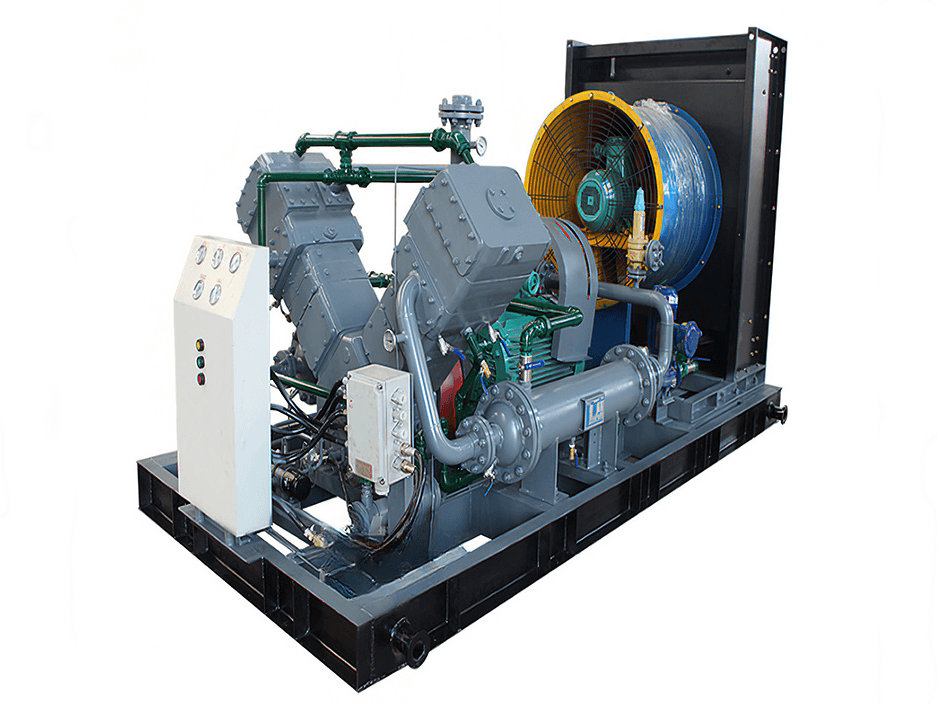
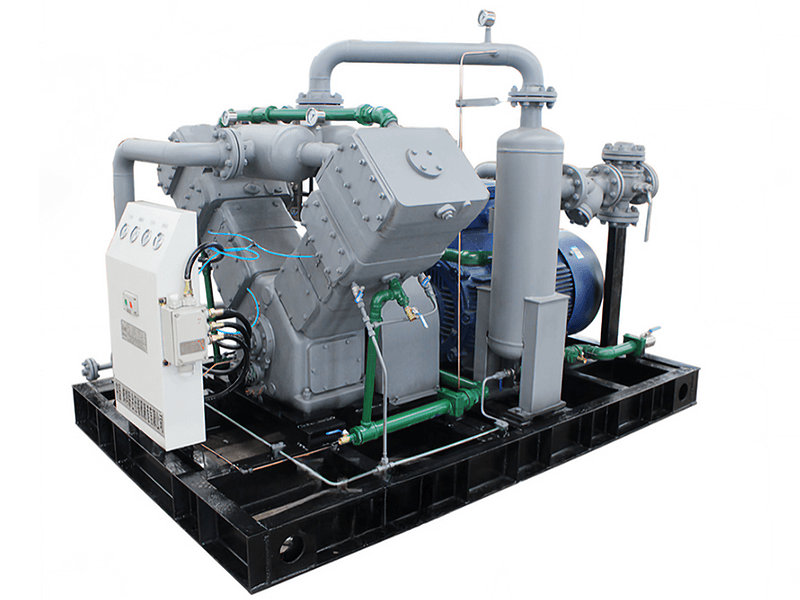
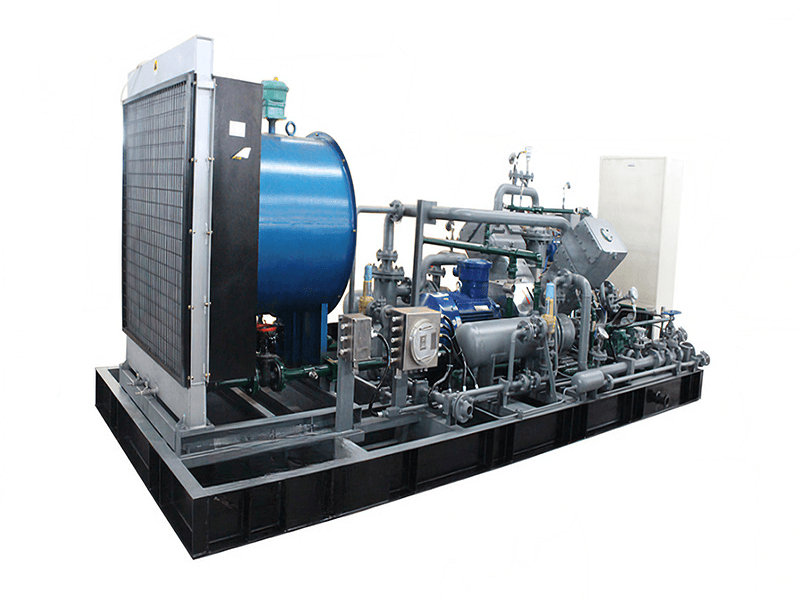
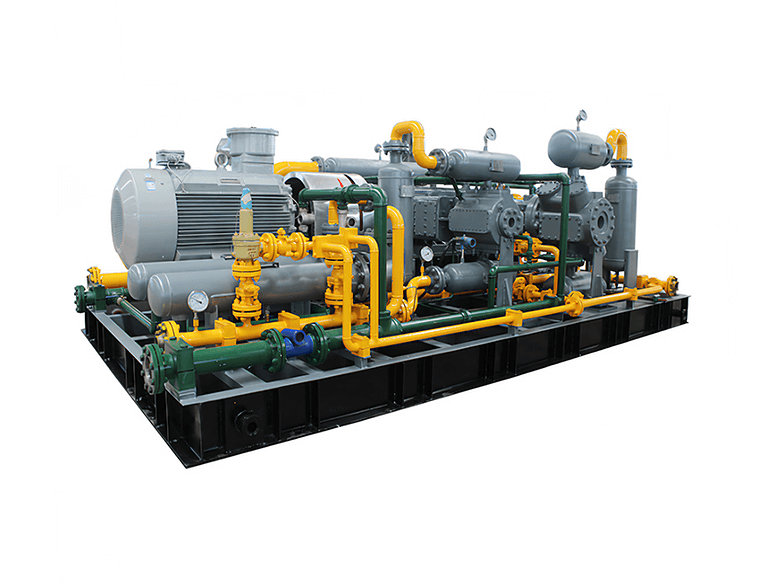
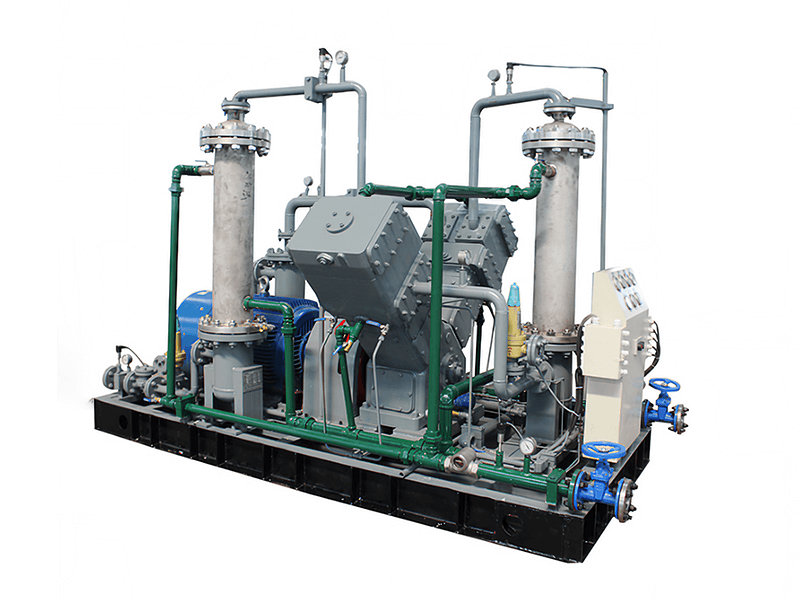
The application landscape of oil-free Hydrogen Compressors extends far beyond the relatively familiar setting of hydrogen refueling stations. From green hydrogen production to industrial decarbonization, from the electronics industry to hydrogen-based metallurgy, this critical equipment serves as a bridge connecting hydrogen production and utilization across a diverse range of applications, forming a core support for realizing a closed-loop, large-scale hydrogen economy.
Core Application: Cascade Compression at Hydrogen Refueling Stations
In the key scenario of hydrogen refueling stations, oil-free compressors play an essential role in cascade pressurization. Hydrogen delivered from upstream storage and transport enters the station and must undergo three stages of pressure increase: from storage tanks (20 MPa) to tube trailers (45 MPa) and finally to on-board storage cylinders (70 MPa or 35 MPa). Each compression stage imposes stringent requirements on purity, reliability, and stability.
Oil-free compressors demonstrate unique suitability in this process. Whether diaphragm-type or oil-free screw-type, these machines ensure that hydrogen remains free from lubricant contamination during pressurization, directly meeting the strict purity standards for fuel cell vehicles. For passenger car refueling applications using 70 MPa Type IV cylinders, compressors must also deliver higher discharge pressures and more precise flow control, presenting further challenges in seal design and material selection.
Emerging Scenario: Green Hydrogen Coupling at the Production End
In the electrolytic production of hydrogen, the value of oil-free compressors is becoming increasingly evident. Green hydrogen produced by PEM (Proton Exchange Membrane) and AEM (Anion Exchange Membrane) electrolysis technologies boasts extremely high purity at the point of generation. Introducing oil-lubricated equipment during downstream compression would compromise this "inherent purity" throughoil contamination.
In this scenario, oil-free compressors act as guardians of purity. They boost hydrogen from atmospheric pressure to pipeline transmission pressures (typically 2–4 MPa) or storage/transport pressures (20–45 MPa) without any risk of oil contamination, ensuring that green hydrogen remains clean throughout the entire value chain from production to end use. This characteristic is strategically indispensable for green hydrogen projects targeting high-end applications such as fuel cells and the electronics industry.

Industrial Scenarios: The Decarbonization Path for Chemicals and Metallurgy
Hydrogen applications in the industrial sector are accelerating, opening broader markets for oil-free compressors.
In the steel industry, hydrogen-based direct reduction shaft furnace technology is regarded as a key pathway to carbon neutrality. Hydrogen replaces coke as the reducing agent to convert iron ore into sponge iron, with the reaction generating virtually no carbon dioxide. This process requires hydrogen to be compressed to reaction pressures of several megapascals, with certain demands on purity—any impurities may affect reduction efficiency or final product quality. Large-scale oil-free reciprocating compressors play a central role in this scenario, providing the equipment foundation for scaling hydrogen-based metallurgy.
In the electronics industry, ultra-high-purity hydrogen is widely used as a carrier gas or reducing agent in critical semiconductor manufacturing steps such as epitaxial growth and oxidation annealing. These applications demand extremely stringent hydrogen purity, typically exceeding 99.9999%. Oil-free compressors, by eliminating the possibility of lubricant introduction from the source, have become a mandatory choice for the production and delivery of electronic-grade hydrogen.
Future Trends: Advancing Toward Higher Pressure and Larger Flow
As the hydrogen industry continues to evolve, oil-free compressor technology is making ongoing breakthroughs toward higher pressure, greater efficiency, and higher integration.
In terms of pressure capacity, with the gradual adoption of Type IV (plastic liner, carbon-fiber fully wrapped) and Type V (linerless, all-composite) cylinders, on-board hydrogen storage pressures are moving into the ultra-high range of 90–140 MPa. Hydraulically driven piston intensifiers and diaphragm compressors are pushing limits in this field, achieving stable operation under extreme pressure conditions through optimized seal designs and material selections.
For large flow rates and integration, megawatt-scale green hydrogen projects (above 10 MW per single unit) challenge traditional single-machine solutions, which struggle to balance flow requirements with footprint constraints. Modular combination designs have emerged—using multi-head parallel configurations and skid-mounted integration to achieve high-flow compression while minimizing site area, offering an efficient solution for large-scale green hydrogen storage and transport.
At the technology frontier, the concept of cryogenic compression is attracting industry attention. Cooling hydrogen to extremely low temperatures (around –200°C) prior to compression can significantly reduce compression work, achieving hydrogen densities close to liquid hydrogen while avoiding the complex thermal insulation required for liquid hydrogen storage and transport. Although still in the exploratory stage, this technical pathway shows substantial application potential.
In equipment manufacturing, the localization of critical components for oil-free compressors in China is steadily advancing. Domestic production capabilities for key parts such as high-pressure diaphragm heads and high-speed rotors are improving, enhancing product cost-performance ratios. With the accelerated deployment of Belt and Road hydrogen projects, Chinese-made oil-free compressors are gradually entering overseas markets, contributing to global hydrogen infrastructure development.
Conclusion
Technological iteration is an endless pursuit. Oil-free hydrogen compressors are continuously evolving toward higher pressure, greater efficiency, and higher integration, playing an irreplaceable role in connecting every link between hydrogen production and utilization. From refueling stations to hydrogen-based steelmaking, from green hydrogen production to the electronics industry, this critical equipment is providing a solid industrial foundation for the construction of a hydrogen-powered society.